
Pigs, Packets & the Pacific
Published 30 September 2026 · Author: Franck Martin
How a mailing list helped connect the world's biggest ocean — Suva, Nouméa, Apia, Alofi, Funafuti, 1994–2009
By Franck Martin
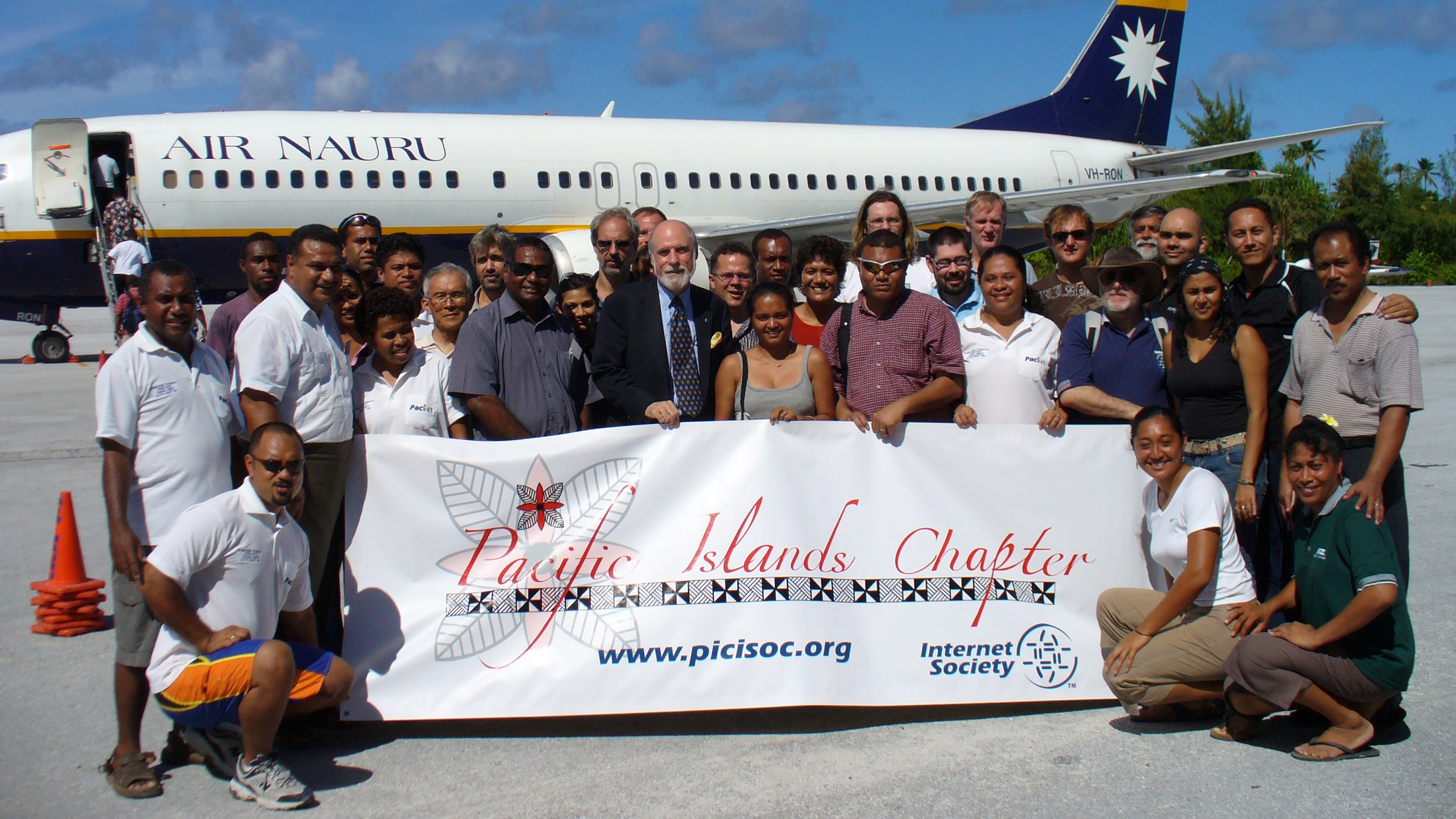
This article is built on the PIGNet email archive: 6,697 messages posted between May 1998 and November 2012 by the people who built the Internet across the Pacific Islands (Many thanks Phill Hardstaff for having kept that archive over the years). I lived that story at SOPAC in Fiji, as a founder and Vice-Chair of the Pacific Islands Chapter of the Internet Society (PICISOC), and later on the Internet Society's Board of Trustees. Here is how it looked from the inside.
Prologue: a joke list that started it all
On 27 May 1998, an email landed in inboxes from Nouméa to Apia:
"Here it is, the first post on PIGNet... PIGnet is supposed to be a user forum (not a techeads list) so please feel free to chat, discuss, complain and share your experiences of Internet in the Pacific."
— Al Blake, Secretariat of the Pacific Community, first PIGNet post
Al's inaugural message was, delightfully, a glossary of office slang: mouse potato, ego surfing, blamestorming. It set the tone for what PIGNet — the Pacific Internet Group mailing list — would become: half water cooler, half help desk, occasionally a war room.
The list was born from a 1997 UNESCO-sponsored Pacific Islands Telecommunication Association (PITA) workshop in Suva — as Herve Dropsy of SPREP recounted it in late 1998 — and the IT-PacNet meeting of 1998. And IT-PacNet itself was older still: it had started around 1994 as two IT managers — Sam Taufao at the Forum Fisheries Agency in Honiara and Leslie Allinson at SOPAC in Suva — comparing notes over links measured in kilobits. The meetings bounced back and forth between The Forum Fisheries Agency (FFA) and the South Pacific Applied Geoscience Commission (SOPAC), and the South Pacific Regional Environmental Programme (SPREP) in Apia joined in time, until slowly it became a gathering of IT managers from across the whole region — myself included, running the network and database systems at SOPAC.
My own first post to the list came two months later, in July 1998, and it was pure Pacific pragmatism: a warning about chain letters and hoaxes — the "dying boy wants business cards" urban legend — pointing out that on a 9,600 bps dial-up link, one careless forward cost real money. Someone had to be the list's designated skeptic. I kept the job for a decade.