
Electro music in the San Francisco Bay – Some history and a list of on-going electro events
Published 21 August 2019 · Last updated 31 August 2026 · Author: Franck Martin
Originally published on MerciSF (August 2019).
The well respected Philharmonie de Paris hosted a very successful exhibition about Electro Music over the 2019 Summer. The show focused on Jean-Michel Jarre, Daft Punk, Kraftwerk, and the sound of Detroit and Chicago. Thanks to Franck Martin, a passionate French musician, we take the opportunity to explore San Francisco electro sound instead, and give you hints on how to get into the Bay area electro scene.
You know of Jean Michel Jarre? Daft Punk? Bob Sinclar? M83? Jean-Jacques Perrey? Deep Forest? All notable French artists in Electronic Music… this article is not about them. Instead, we report about Suzanne Ciani, Morton Subotnick, Don Buchla, Dave Smith, r beny and many other electronic artists from the San Francisco Bay area. We also talk about the local electronic music scene, where it came from, and where to find it today.
West coast electro sound versus East coast electro sound
Did you hear about the person going on an acid trip while he was restoring a 60's era modular synthesizer from California State University, East Bay? One of the panels had LSD on it… Who would have thought you could ingest LSD just by contact. The legend says that the red panels were dipped in LSD and that for inspiration, you would touch them and lick your fingers… This legend was told in an interview by Morton Subotnick and Ramond Sender at the San Francisco Tape Music Center in the awesome documentary “I Dream of Wires”.
Buchla synthesizers
Inspired by the designs of Harald Bode in 1959, Don Buchla is credited with Bob Moog for having created, separately, the first popular modular synthesizers in the 60's and defining many sound synthesizing techniques. Before this time, instruments were electric such as the Hammond Organ and a bit electronic like the Theremin.
Don Buchla, based in Berkeley was commissioned by Morton Subotnick (and Ramon Sender) to provide a synthesizer for the San Francisco Tape Music Center. They were looking for an instrument that generates sounds without the need of a magnetic tape. Morton went on to compose “Silver Apples of the Moon”, a revolutionary album at the time, and still is. Meanwhile, on the east coast, Bob Moog was also working on a modular synthesizer.
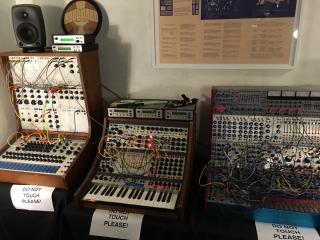
The difference between Moog and Buchla devices? Moog synthesizers had a standard piano keyboard. This made the instrument familiar to many. Like Jean-Michel Jarre said, “in my music only the instruments are electronic”. Wendy Carlos recorded “Switched on Bach”. Classic Bach pieces but performed on this new electronic instrument. It was revolutionary. Wendy went on to compose the music of the movie “Tron”.
Meanwhile on the west coast, pushed by Morton and Ramon, Don Buchla didn't want to be limited by harmonic scales, so he did not want to add a piano keyboard to his synthesizer. He created all sorts of interfaces, the most famous is the thunder keyboard where keys respond to pressure and location. You can hear the difference of composition in “Silver Apples of the Moon”. This track is, say, arrhythmic. Additionally the east coast uses subtractive synthesis: a rich sound with harmonics, where a filter filters high harmonics out, while the west coast tends to use additive synthesis where you add simple oscillators together.
Suzanne Ciani
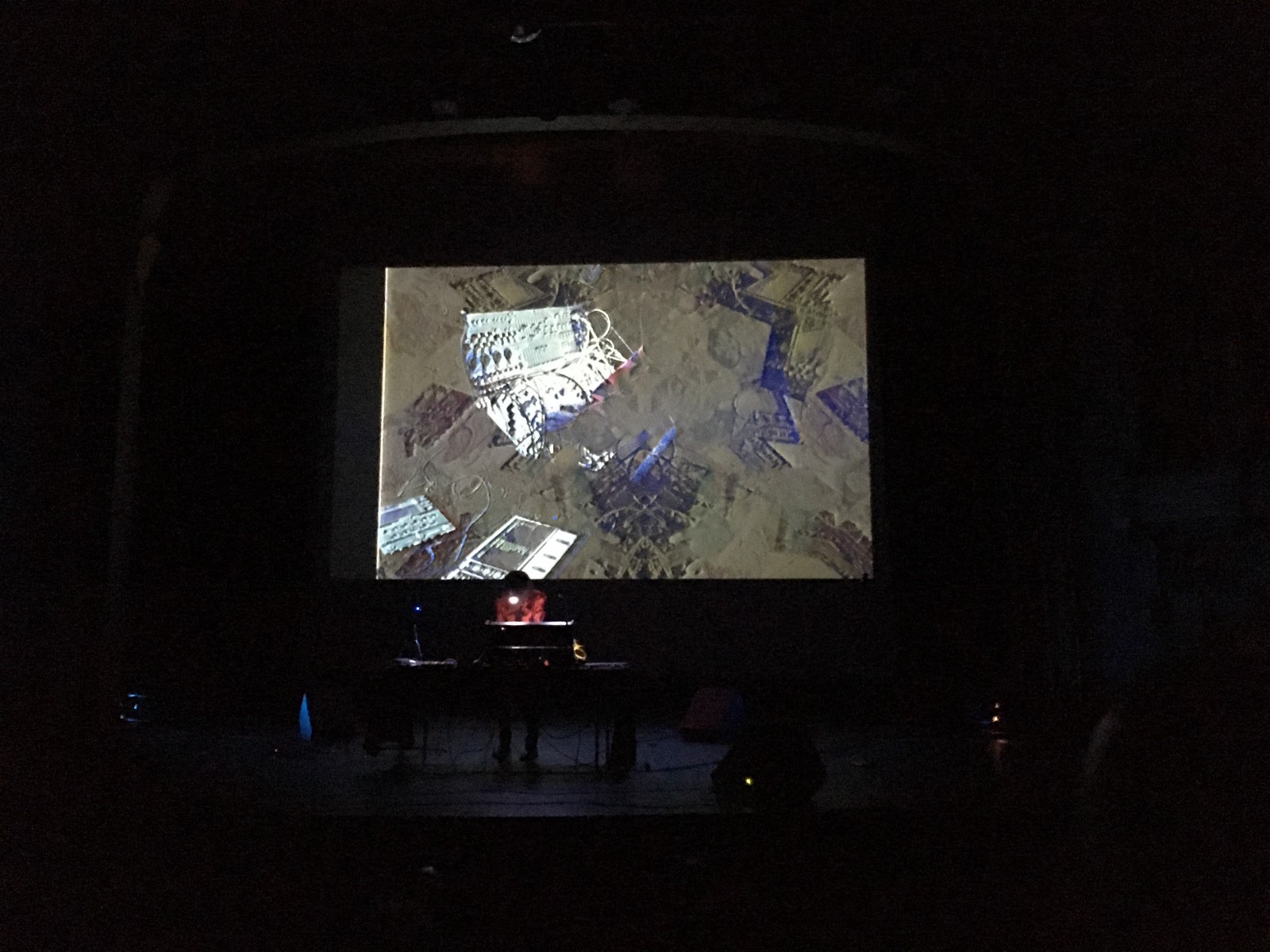
Suzanne Ciani, while studying music at the University of California, Berkeley, met Don Buchla, and worked her way to own one of the synthesizers. She was an early sound designer, worked in the advertisement industry in New York and she is credited for the sound of the Coca Cola bottle being opened. She also designed the sounds of the Xenon pinball in 1979 (The bar Evil Eye in Mission still owns one), and she was the first woman to compose the soundtrack of a Hollywood film in 1981: “The Incredible Shrinking Woman”. She performs today on a Buchla synthesizer in quadraphonic audio that you can listen to on her album “Live Quadraphonic”. The first show for this album was at the Gray Area Theater in San Francisco in 2016.
From analog to digital synthesizers
These analog synthesizers are all modular, because you place modules that do basic functions (Oscillator, Filter, Envelope, Sequencer, Effect,..) into a powered case, then use patch cables to link each module together. These “patches” are what creates the final sound, and they are difficult to reproduce.
All these analog synthesizers became derelict in the 80's when digital synthesizers came around, the most famous of them the Yamaha DX7 and Korg M1. With digital instruments you can recall preset patches at the touch of a button. Originally analog electronic instruments were fickle, and for some instruments you had to re-tune them often – sometimes during a performance! Digital synths solved this issue. Yet, modular synthesizers and analog synthesizers came back into fashion with Doepfer in the late 1990's.
Nowadays the line between analog and digital has become blurred, but before we dig deeper into that, we must first talk about the Prophet-5 and MIDI.
Dave Smith, Sequential, and MIDI
Dave Smith was working on micro-controllers here in the Silicon Valley, and he had the idea to use them to control synthesizers. He first created a sequencer to control a Minimoog. Then later in 1977, he created the famous Prophet-5. It used micro-controllers to control analog circuitry and provide several voices perfectly tuned, using the same “patch”. This resulted in one of the first polyphonic synthesizers. In the early 80's, he co-invented MIDI, the protocol that allows music instruments to control each other, with Chet Wood based on an idea from Roland founder Ikutaro Kakehashi. This protocol has now become ubiquitous.
The company that Dave Smith created and re-created, Sequential, is located in San Francisco's North Beach area, and if you are in the music community, you can request to visit. You'll be able to test all the sequencers that they created and still sell. I did this and made a 360 ambisonic video of my visit.
Robotspeak — where to get your gear
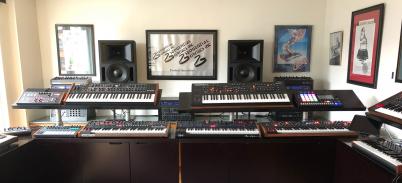
Sequential is the perfect setting to try all the sequential synthesizers and then head to Robotspeak in the Lower Haight to buy one. Robotspeak is a one of a kind shop, they sell synthesizers and everything to make your own modular synthesizer. This is where I got my initial gear. I bought a case with a couple of modules and over time, added more modules (warning, this can be addictive). Nowadays you can buy a semi modular synthesizer in the Eurorack format. For instance, Moog Mother-32, Makenoise 0-coast or Behringer Neutron are available around $500 and have everything to get you started.
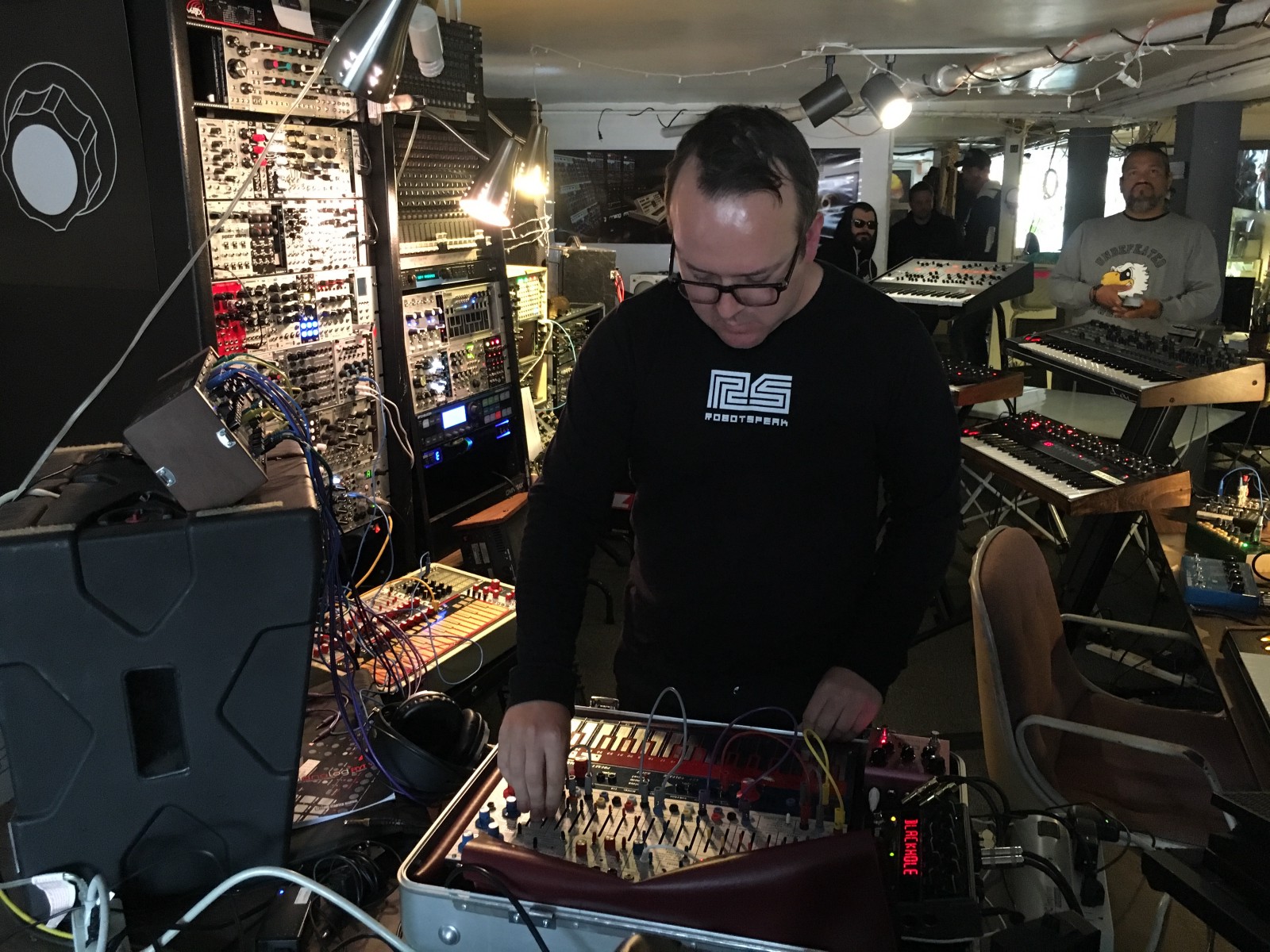
The original Moog modular synthesizers are in the 5U format, but a German engineer, Doepfer, looking at the schematics, realized it could do smaller, cheaper, better with modern components. He adopted the Eurorack format which is in 3U format, and defined a standard bus board with 12V, -12V, 5V supply. From this standard, other manufacturers started to make modules, and you can now mix and match many different modules. See also Quadraphonic on Eurorack.
Where to listen to electro in the Bay Area
Church of Thee Super Serge — Robotspeak, San Francisco
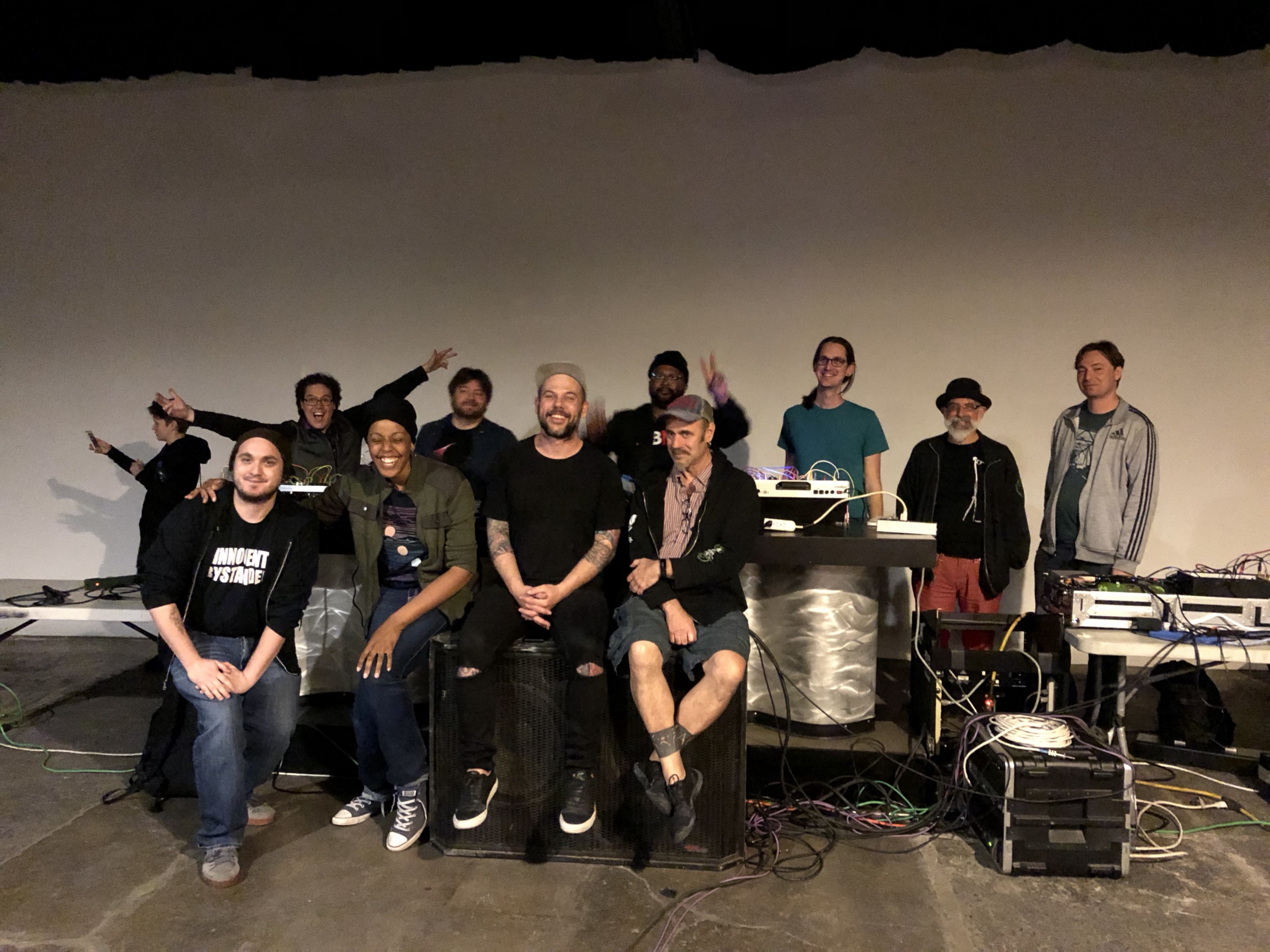
Every other month, Steve, the owner of Robotspeak, organizes the Church of Thee Super Serge. It is a free concert, usually on the 3rd Saturday of the month from 3pm to 6pm. There are usually 3 to 4 performers, with 20mn sets. It is a good way to meet other modular synthesizers performers.
Resonant Frequencies — Oakland
Dirty Bill also helps organize visuals at Resonant Frequencies. This is one of the open mic events in the Bay area tailored to electronic music performers. No DJ's, but live performances, on modular synthesizers, synthesizers, drum machines, virtual synthesizers and visual synthesizers. This is run on the first Sunday of the month from 6pm to around 10pm at Soundwave studios in Oakland. It's been running since January 2018. Sign up is at 5pm. Then each performer gets 20mn, and newcomers get to perform first after an intro set from the founder Kevin Friedrichsen (D3N5ITY & Time).
More details in Electronica open mic events around San Francisco.
Resident Electronic Monthly — San Francisco
The other Open Mic event currently running is Resident Monthly. It is on the 2nd Tuesday of the month at the Laundry in Mission District of San Francisco. It takes place from 8pm till 10pm. Each artist has 20mn to perform. Signing up is done in advance online as the format allows for only 6 artists to perform each night.
I help organize this event with Emory (EzPuzzle) and Jason Worden, and this is another popular open mic geared toward electronic music performers and visualists. It was originally created by Jeremy Black in November 2017. See Resident Electronic Monthly for the full history and archive.
inWooble — LinkedIn, San Francisco
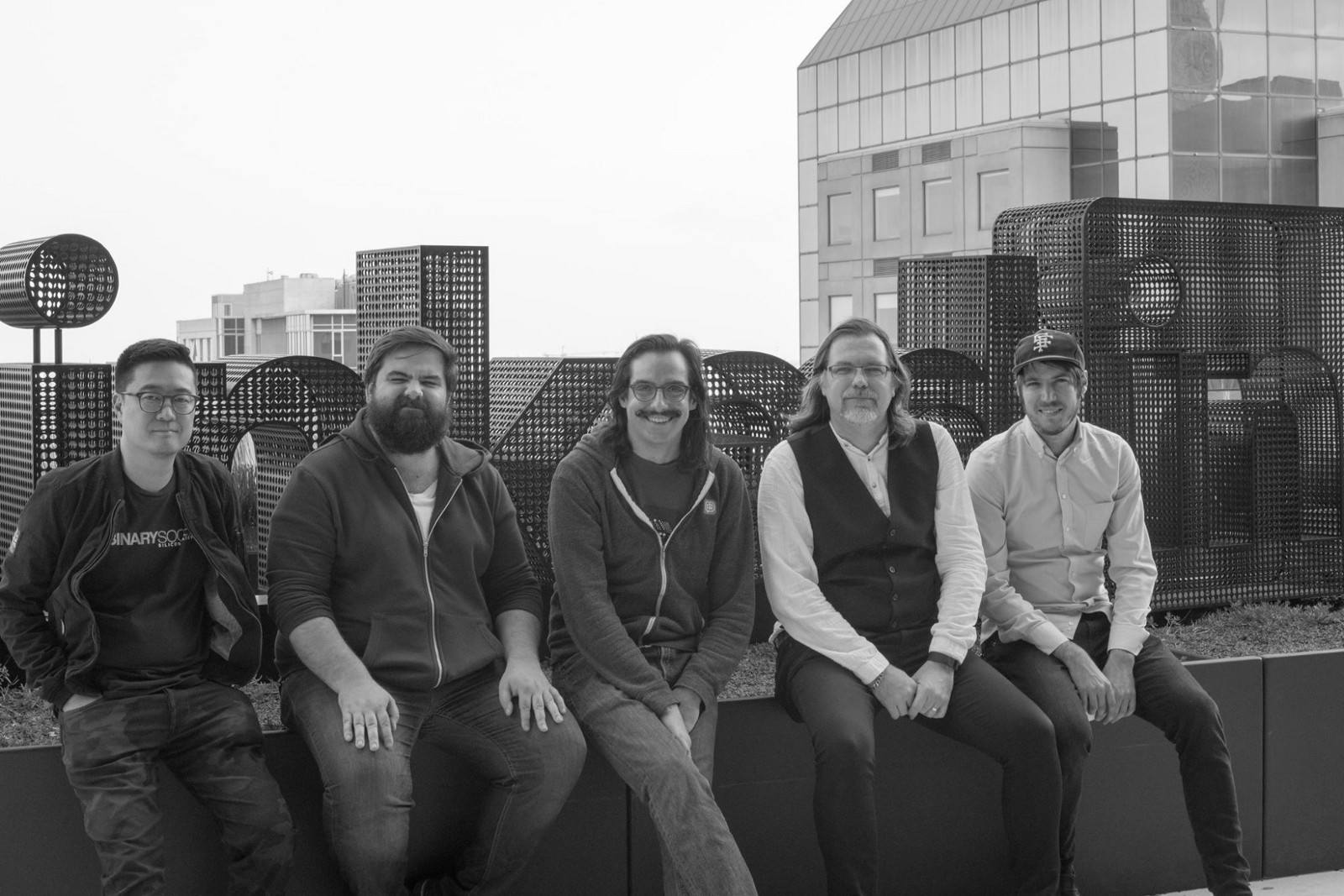
In addition to these events, I have the opportunity to use an awesome conference room at LinkedIn in San Francisco. Every month, we have inDay, which is a day for personal growth. There are a few of us modular synthesizer performers there and we invite guests to come join in a jam session with us. Together we form the performance group FM+1. The event is called inWooble, and we broadcast it live on my YouTube Channel.
Electro music yearly events and festivals
These are events that run on a regular basis but there are also some yearly events, like the San Francisco Electronic Music Festival, or the Gray Area Festival or the Day of Noise at KZSU Stanford or the weekly KZSU radio show “Bloop and Quack”, or the San Francisco Tape Music Festival or more recently the Mutek.SF festival.
Speaking of the Day of Noise at Stanford, you will want to check the Center for Computer Research in Music and Acoustics (CCRMA).
Once you become familiar with some of the artists and the community, it will become easier to discover the local events that are not on a regular schedule, like the concert earlier this year at the Mezzanine with Suzanne Ciani, r beny and Ose, or the show I co-organize FM+1 Mystery Event.
There are many artists, too many to mention — r beny and Ose are two emerging artists. r beny is known for his ambient pieces with slightly detuned drones, while Ose is known for merging Hindustani music with modern electronica. She founded the label Ghunghru to help artists experiment in electronic music.
I hope you enjoyed this journey through time, from the beginning of electronic music on the West Coast to the current shows and their local artists. Many have been omitted, the fault is entirely mine, so I hope you will come to one of these events to complete the list.
For a deeper timeline of Bay Area electronic music history, see Electronic Music History in the San Francisco Bay Area and San Francisco Electronic music scene.
Discover and places to visit
Discover Electronic Music artists in the bay area: Spotify playlist
- Robotspeak shop: Lower Haight, San Francisco
- Sequential Circuits: Synthesizer Company in North Beach, San Francisco
- CCRMA: Music Lab at Stanford, Palo Alto
- Gray Area Theater: Event Theater, Mission District, San Francisco
- Audium: 180 audio Theater, Japantown, San Francisco
Many thanks to Carson Sestili and Kalib DuArte for reviewing the original MerciSF article. All pictures Franck Martin unless specified.